RAMBOfit | Elite Fitness Coaching

Peak Performance Deals

Fuel your gains for less, and take your training to the next level.

7 Day Customer Support
Live Chat
+1 786-896-9774
Fuel your gains for less, and take your training to the next level.      |      Fuel your gains for less, and take your training to the next level.      |      Fuel your gains for less, and take your training to the next level.

Non classé

Non classé

6-Week Lean Bulk Workout Program for Women

Workout Description This six-week lean bulk program is designed specifically for women who want to build muscle in a structured, effective way while minimizing unnecessary fat gain. Beginners who follow the program closely may gain up to 10-12 pounds of bodyweight, while experienced lifters can still expect meaningful progress in the range of 5-7 pounds, depending on nutrition, training history, and recovery. What Is a Lean Bulk? A lean bulk focuses on building muscle through a small, controlled calorie surplus combined with progressive strength training. The goal is to provide enough fuel for growth without dramatically increasing body fat. Success comes from balance, eating enough to support performance and recovery while keeping training intensity high and consistent. Nutrition Guidelines for a Lean Bulk Calories To build muscle, you need to consume more calories than you burn. However, this does not require excessive eating. A surplus of approximately 300-500 calories per day is typically enough to support muscle growth without significant fat gain. Start by determining your maintenance intake using a BMR or TDEE calculator. Once you know your maintenance calories, add a moderate surplus and monitor progress weekly. Food Choices Prioritize nutrient-dense, performance-focused foods: Macronutrients A simple starting point: If body fat begins increasing too quickly, adjust toward: Hydration Multiply bodyweight by 0.66 to estimate daily water intake in ounces. Example: 120 lbs × 0.66 = ~80 oz per day. Training Principles for a Lean Bulk Training for a lean bulk still requires effort and progression in the weight room. Focus on compound lifts to build strength and overall muscle, while using isolation exercises to target specific areas and improve balance. With extra calories supporting performance, aim to gradually increase weights and take adequate rest between sets so each effort stays strong and controlled. Cardio should be more strategic during a bulk. It’s still important for health, but too much can interfere with muscle growth. This program includes a full-body conditioning session, and any additional cardio should be limited to light activity, such as a few weekly walks for recovery. Related: A Beginner’s Guide to Zone 2 Cardio Progressive Overload Strategy Progression is the backbone of this program. The goal is to increase weight, reps, or performance quality gradually over six weeks. How to Progress 6-Week Progression Table Week Focus Intensity Progression Method Week 1 Technique & Baseline RPE 7-8 Learn movements, establish starting weights Week 2 Volume Build RPE 8 Add reps within range Week 3 Load Increase RPE 8-9 Increase weight slightly Week 4 Progressive Load RPE 9 Push top rep ranges Week 5 Peak Intensity RPE 9-10 Increase load again where possible Week 6 Performance Week RPE 9-10 Aim for the strongest lifts and the highest quality reps Weekly Training Structure The program follows a five-day training schedule: Each exercise is performed for three working sets unless otherwise noted. The first set should feel moderately challenging, the second set should approach fatigue, and the final set should be performed close to muscular failure while maintaining proper form. 6-Week Lean Bulk Workout Program for Women Most strength workouts in this program take approximately 60-75 minutes, including warm-up time, while the full-body conditioning session can be completed in about 20-35 minutes, depending on experience level.
Non classé

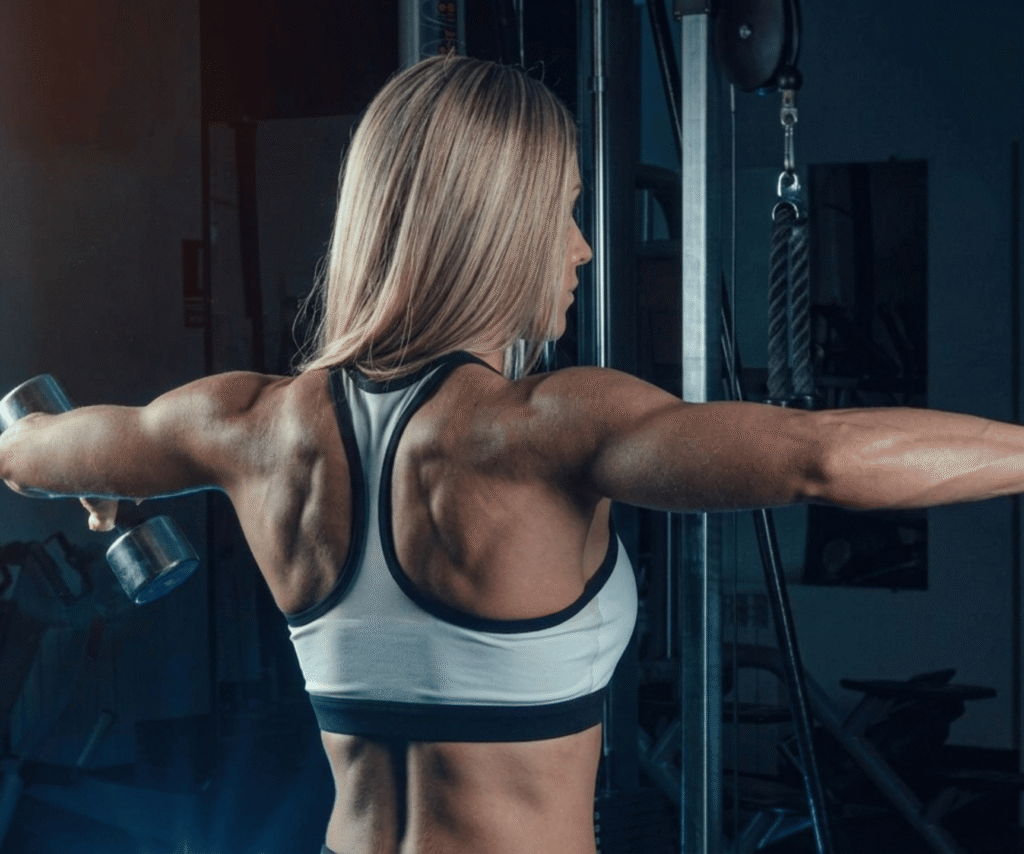
8-Week Advanced Muscle Building Workout for Women

Workout Description Many lifters rotate through different training phases throughout the year. Some seasons focus on getting leaner, while others prioritize building muscle and strength. For women looking to enter a true hypertrophy phase, an advanced training program can help maximize progress and push past plateaus. This 8-week advanced muscle-building workout for women is designed to increase overall strength while developing muscle in key areas, including the glutes, legs, back, and shoulders. With consistent effort, proper nutrition, and adequate recovery, most trainees can expect measurable improvements in both performance and physique within two months. Who This Advanced Women’s Workout Program Is For This program is best suited for experienced lifters who are comfortable with proper exercise technique and higher training volume. The workouts include compound movements, unilateral exercises, and advanced muscle-building strategies that require focus and a strong mind-muscle connection. Intermediate lifters who want to challenge themselves can still try the program, but the priority should always be movement quality. Slow, controlled repetitions and proper execution are more important than increasing weight too quickly. If any movement feels overly challenging, start lighter and focus on mastering the pattern before progressing. Why This Is an Advanced Muscle Building Program Compared to beginner or intermediate routines, this plan uses higher training volume and multiple exercises targeting similar muscle groups from different angles. The goal is hypertrophy, meaning muscle growth through progressive overload and consistent stimulus. Each session contains enough volume to promote adaptation without isolating single muscle groups excessively. The structure allows muscles to be trained multiple times per week while still providing adequate recovery through strategic scheduling. Training Split and Weekly Structure The program follows an upper/lower body split performed on a two-day-on, one-day-off schedule. This format helps maintain high training intensity while allowing time for recovery between demanding sessions. A typical weekly structure may look like: Training more than two consecutive days is not recommended because recovery plays a major role in muscle growth and long-term performance. Rest Periods and Workout Duration Because this is a high-volume hypertrophy program, rest periods should be long enough to maintain strength and performance across all sets. Two to three minutes of rest works best for most compound exercises such as squats, hip thrusts, presses, and rows. Secondary movements can use slightly shorter rest periods, while isolation exercises and core work generally require around one minute. Most sessions will last between 60 and 90 minutes, depending on gym flow, warm-up time, and rest intervals. Lower body days tend to run longer due to the volume and overall fatigue involved. 8-Week Advanced Muscle Building Workout for Women Day 1: Lower Body and Core Start with a 10-15 minute warm-up that includes light cardio, dynamic mobility, and controlled lower-body activation. The focus of this session is quad development, overall lower body strength, and core stability. Perform each repetition with a slow tempo and controlled movement. Training to absolute failure is not necessary; finishing within one or two reps of the target range is ideal for hypertrophy. Exercise Sets Reps Rest Dumbbell Step Up 3 10-12 each leg 90-120 sec Barbell Back Squat 3 10-12 2-3 min Leg Press or Hack Squat 3 10-12 2-3 min Dumbbell Goblet Squat 3 10-12 90-120 sec Leg Extension 3 15 60-75 sec 45 Degree Leg Press Calf Raise 3 15 60 sec Weighted Crunch 3 15 45-60 sec Shoulder Taps 3 10 taps each side 45-60 sec Day 2: Upper Body  This upper body workout targets the back, chest, shoulders, and arms through a mix of pushing and pulling movements. Since there are two upper body sessions in the program, each uses different exercises to provide varied stimulus and promote balanced development. If time is limited, certain exercises performed near each other in the gym can be structured into supersets. This approach can reduce session length without sacrificing training quality.

Non classé

Stronger Together: 8-Week Parent & Teen Workout Program

Workout Description One of the best things we’ve seen with training programs on M&S is parents using them to introduce their kids to the benefits of lifting and living a healthy lifestyle. Seeing those stories in the comments and on social media has been incredible. So we decided to take it a step further. This program is designed to help parents stay strong while giving teens a true “Weight Training 101” experience. Over the next eight weeks, both generations will train together, learn together, and improve together. Whether you’re 43 or 13, this routine can deliver real results. Related: 8-Week Muscle Building Program for Adults 40+ Overview This is an 8-week program where both the parent and the teen follow the same workouts each week to progress through either reps or weight. Each workout is built to challenge experienced lifters while teaching beginners the fundamentals of proper training.  Related: Teenage Bodybuilding Guide: How To Workout, Eat & Grow Simple, Effective Movements There are no overly complex exercises here, and that’s intentional. The focus is on mastering foundational movements, understanding how muscles work, and building confidence under the bar. Muscle + Endurance Focus All working sets are 10+ reps. This approach helps build muscle while improving muscular endurance, without placing excessive stress on the joints, something that benefits both parents and teens. A Strong Starting Point Teens are still growing and don’t need excessive volume to progress. Parents, on the other hand, get an efficient, effective routine that fits into a busy schedule while creating valuable time together in the process. Warm-Up This warm-up prepares the body safely and efficiently. Stick to this template, or make small adjustments as needed. Total time should be 10-15 minutes max. Finish with light stretching until you feel ready to train. Recommended: The Best 15-Minute Warm-Ups The Workouts This is a 4-day split: Push, Legs, Pull, and an optional Full-Body day. Placing leg day between push and pull allows for better upper body recovery. Each workout should take around 45-60 minutes, making it realistic for busy parents while still providing enough volume to help both lifters progress. The program is designed for a gym setting, but exercises can be swapped if needed. As long as the replacement matches the movement pattern (press for press, row for row), you’re good to go. For teens, this is about learning movement patterns, building confidence, and understanding effort, not maxing out. For parents, it’s about maintaining muscle, building strength, and staying consistent. Each workout ends with a friendly competition to keep things fun and push both of you to improve. A typical weekly structure may look like: Related: Rest Day Strategies: Active Recovery vs. Passive Recovery Cardio Regardless of what goals both parents and teens may have, cardio should still be included as part of the program. Along with supporting cardiovascular and respiratory health, cardio can also help improve endurance, recovery, and overall conditioning while assisting with calorie expenditure if fat loss is a goal. There are two main types of cardio you can include alongside this program: Zone 2 cardio and High Intensity Interval Training (HIIT). Zone 2 Cardio Zone 2 cardio is the more moderate approach and will likely be the better option for most people most of the time. The goal is to keep your heart rate elevated while still being able to comfortably hold a conversation. Good Zone 2 cardio options include: Benefits of Zone 2 cardio: HIIT Cardio If both of you are feeling good and want a more challenging conditioning session, then HIIT cardio can be a great option as well. HIIT alternates short bursts of high-effort work with lower-intensity recovery periods. Good HIIT cardio options include: Benefits of HIIT cardio: HIIT workouts are typically shorter than Zone 2 sessions, but they are far more intense and may require additional recovery. Keep sessions to 20-30 minutes, either after lifting or separate from workouts. Avoid doing cardio before lifting, as it may impact performance. Recommended: 20 Minute HIIT Workout You Can Do Anywhere 8-Week Parent & Teen Workout Program Day 1: Push Day For many parents, the bench press was their introduction to strength training. We’re keeping that time-honored tradition, while also including exercises that are joint-friendly for you and foundational for your teen. Rest 2-3 minutes between sets. To keep things moving, one partner can lift while the other recovers.

Non classé

Dumbbell Only Workout: Increase Your Bench Press in 8 Weeks

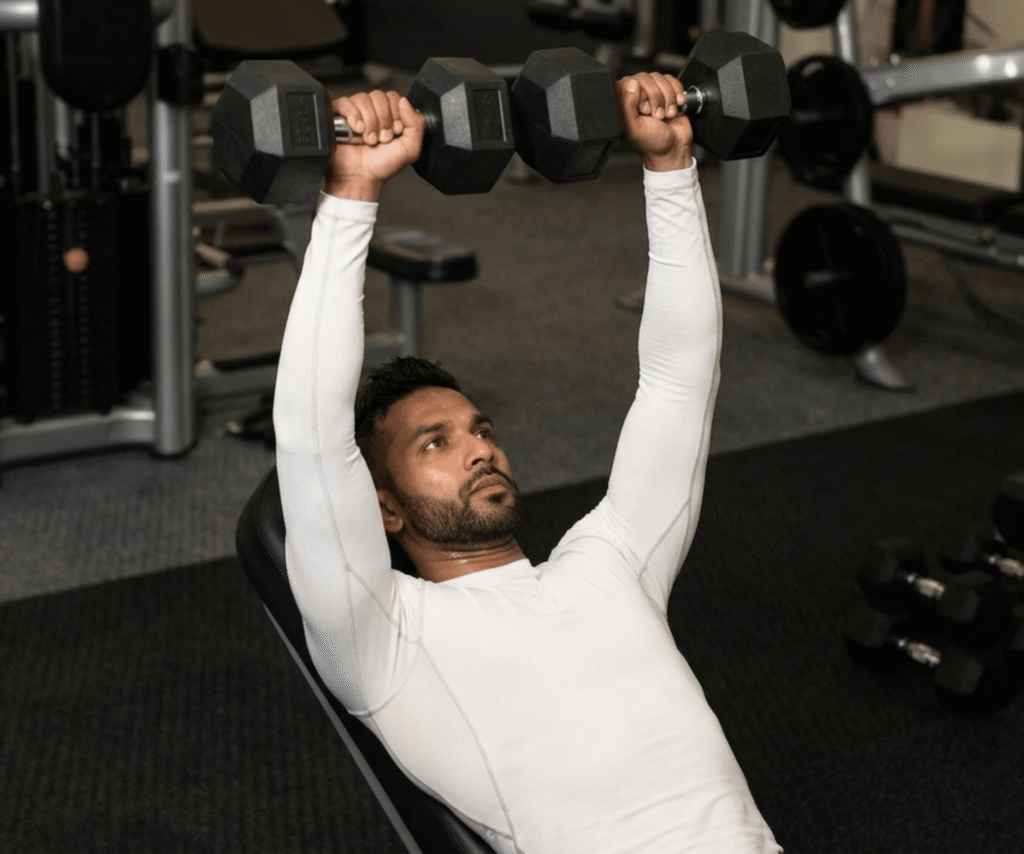
Workout Description There is a lot of discussion and many milestone lifts being celebrated on the M&S Bench Press Calculator. If you scroll through the comments, you’ll see lifters of all ages and experience levels sharing personal records and big achievements. That’s great to see, but some readers may feel left out because they either don’t train with a barbell or only have access to dumbbells at home. This program is for you. This 8-week dumbbell bench press program is designed to help increase strength, improve pressing performance, and build confidence with dumbbell training. Even without a barbell, you can still develop serious upper-body power and improve your chest, shoulders, and triceps while working toward a stronger dumbbell bench press. Who Should Follow This Dumbbell Bench Press Program? This workout program is ideal for beginners and intermediate lifters who want to get stronger with dumbbells while avoiding some of the discomfort or limitations that can come with heavy barbell bench pressing. It can also be a great option for people training in a home gym with limited equipment. While dumbbells may not be the first choice people think of for strength training, they can still be extremely effective for building pressing power and improving muscular development. Dumbbells also require more stabilization and control, which can help improve overall pressing mechanics and coordination. Most commercial gyms carry dumbbells up to 100 pounds, while some gyms may offer pairs as heavy as 120 or 125 pounds. If you eventually reach the point where you can press those weights for reps, then you may be ready to move on to a more advanced barbell bench press strength program. Best Dumbbells for a Home Gym Gym members should have little trouble following this plan, but home gym users may not have access to a full dumbbell rack. Fortunately, there are still several good options for building strength at home. Adjustable Dumbbells Adjustable dumbbells are one of the best investments for a home gym because they provide multiple weight options while taking up minimal space. Many popular sets range from 5 to 60 or 70 pounds, while heavier models may go up to 90 or even 100 pounds per dumbbell. They also make weight changes quick and convenient, which helps workouts flow more smoothly. While the initial cost can be higher, a quality pair can provide years of reliable training. Plate-Loaded Dumbbell Handles Plate-loaded handles are often a more affordable option and allow you to add weight gradually over time. Just make sure both dumbbells are loaded evenly so the resistance stays balanced on each side. The biggest drawback is that changing weights takes more time compared to adjustable dumbbells. However, these handles are durable, versatile, and can often support much heavier loads, making them a solid long-term choice for stronger lifters. No Bench? You Can Still Build Strength Having an adjustable weight bench is helpful, but it is not mandatory for this program. If you do not have access to a bench, you can still perform most of the movements on the floor or another stable surface. If an exercise calls for an incline variation, simply substitute a flat version instead. Seated exercises can also be performed on a sturdy chair if necessary. The key is consistency and progressive overload, not having perfect equipment. How to Test Your Dumbbell Bench Press Max Even though dumbbells can feel safer than a barbell, it is still smart to have a training partner or spotter nearby when testing a heavy lift. This can help improve both safety and confidence during max attempts. To test your dumbbell bench press max, begin with the dumbbells locked out at the top of the movement. Lower the weights under control until they reach your chest, pause briefly, and then press them back to the starting position. If you can complete one clean rep, you have found your max. If the weight feels too easy, increase it slightly. If you miss the rep, reduce the load and try again after resting. Weekly Training Schedule Overview This program uses five training days each week with a balance of heavy pressing, recovery-focused work, and full-body strength training. The goal is to improve dumbbell bench press performance while still allowing enough recovery to make steady progress over the full eight weeks. A sample weekly schedule would look like this: Heavy Bench Day Progression Chart Once you know your max, you will use percentages of that weight throughout the program. Over the next seven weeks, the weights will gradually increase to help improve strength, technique, and confidence with heavier dumbbells. In Week 8, you will back off the volume slightly and test for a new max. The progression for the heavy dumbbell bench press workouts is as follows: This gradual progression helps build strength while reinforcing technique and confidence. During Week 8, reduce accessory volume if needed so you are fully recovered for your max attempt. 8-Week Dumbbell Only Workout Day 1: Heavy Bench Day This is your primary strength day and the most important workout of the week. The focus here is moving heavy weight with strong, controlled reps. Each week, you’ll increase intensity based on your max. Train your accessory movements heavy as well, but stop 1-2 reps short of failure. This will help you build strength without burning out too early in the program.

Non classé

8-Week Fat Loss Program for Adults 40+

Workout Description Many people feel that once they reach 40, they can no longer lose significant weight without sacrificing muscle. Research in recent years has debunked this myth, and it applies to both men and women. Just like adults over 40 who want to build muscle, experience plays a role here. Those with more time in the weight room or who are accustomed to rigorous training may find fat loss more challenging than beginners, but it’s still very possible and well worth committing to. Chances are that’s why you’re here, and we have a program that can help you build momentum while losing fat over the next two months. Recommended: Expert Fat Loss Guide: Learn To Lose Fat With Diet & Training Who is This Program For? This program was created for healthy adults ages 40-60. It can work well for both beginners and intermediate trainees. Advanced lifters may not find it extremely challenging, but it can still serve as an effective transition program between more intense routines. Consulting a doctor before starting a workout program like this is always a smart idea, and it’s especially important for older readers. Even if you ask questions in our Comments section, your physician knows more about your health history than a fitness expert on the internet. Essential Tips that Matter as We Age Wisdom is the secret weapon for older fitness enthusiasts. Mature adults know when to put the ego aside and focus on consistency. These tips can help you stay consistent, healthy, and progressing toward your fat loss goals. 1. Warm-Ups and Cool Downs are Musts This is true for all ages, but it matters even more for older adults. Spending 15 minutes warming up the entire body before training can go a long way toward making workouts more effective. Cool-downs can also help lower your heart rate and body temperature after training so you can recover and continue your day feeling better. 2. Focus on Mobility The goal of fitness as we get older is to continue doing the things we could do when we were younger. That includes basics like bending over, twisting, and getting up without difficulty. Use an active rest day to spend 20-30 minutes on stretching, Pilates, yoga, or another activity that promotes mobility. Research supports prioritizing mobility work, especially for adults well over 40.1 Recommended: Mobility 101 – The Basics of Mobility (Plus a 15-minute Daily Mobility Routine) 3. Intermittent Fasting How you eat will be even more important for fat loss than the training itself. No single nutrition plan works for everyone, but intermittent fasting has proven to be very effective for the over-40 population.2 The most popular setup is an 8-hour eating window with 16 hours of fasting (16:8), but there are other schedules with longer fasting periods. The key is keeping protein intake high to help protect muscle mass while losing weight. Whether you use intermittent fasting or not, aiming for 1 gram of protein per pound of bodyweight is a smart target. Our fat loss guide can help you build a nutrition strategy that complements this workout program. 4. Think of Your Joints and Tendons Many gyms are fully equipped with machines that can make training simpler while helping protect your joints. Free weights shouldn’t be ignored completely, but a blend of both is often best. If you train at home, resistance bands can work well alongside whatever free weights you have available. Our Exercises section also offers a wide variety of movements to choose from. About the Workouts A 2024 study showed that a full-body resistance training program was more effective for fat loss in adults than traditional single-body-part split routines.3  Full-body workouts may also lead to less delayed onset muscle soreness (DOMS). This program focuses on the major muscle groups, starting with the lower body and working up to the upper body. Core work is also included. The goal is to support muscle mass and overall fitness, not physique-focused bodybuilding development. That can always become a future goal as you gain confidence and see results. If you want a simple schedule, you can alternate weight training days with cardio days so you are doing some form of activity six days per week. A Monday through Sunday setup could look like this: You can either use the same weight for all sets with a Rate of Perceived Effort (RPE) of 8 out of 10, or work from lighter to heavier weights with the top set reaching an 8-9 RPE. Form should never be compromised for heavier weights.

Non classé

10-Week Lean & Strong Program for Women 40+

A 4-day strength training program for women over 40 designed to build muscle, burn fat, and improve fitness with simple nutrition and recovery support. Workout Description There is a common misconception that women over 40 can’t get into great shape. While recreating the exact recovery speed and hormonal environment of your teens and twenties isn’t realistic, you can absolutely continue to improve your strength, physique, and overall fitness. Progress may come a little more gradually, but consistency still wins. This 10-week program is designed to help you build momentum, regardless of whether your goal is fat loss, muscle gain, or a combination of both. Men can follow this program as well, but it is designed specifically for women in their 40s to 50s, with training and recovery considerations tailored to that demographic. As always, if you have any medical conditions or concerns, consult with a healthcare professional before starting a new training program. Nutrition for Women Over 40 (Fat Loss & Muscle Gain Support) Different readers will have different goals. Some will prioritize fat loss, while others may focus on building muscle. Both outcomes are possible, but it is usually more effective to emphasize one primary goal at a time. Two non-negotiables apply regardless of goal: hydration and protein intake. A simple hydration guideline is to take your body weight in pounds and multiply it by 0.6. That number represents your approximate daily fluid target in ounces. Protein is essential for maintaining and building lean mass, especially as you age. A general target of around 1 gram per pound of body weight is a strong baseline for most individuals following this program. Carbohydrates still play an important role in performance and recovery. Rather than removing them, focus on carbohydrate quality, fiber intake, and timing. Pairing carbs with protein and healthy fats may also help improve satiety and blood sugar control. Supplementation for Women Over 40 Supplementation should support your training, not complicate it. Whey protein isolate can help you reach daily protein targets more easily. A joint support formula may also be helpful for general comfort as training volume increases. Creatine monohydrate is one of the most well-researched supplements for improving strength, performance, and muscular endurance, and it remains effective in older adults as well.1 Magnesium glycinate may support relaxation, sleep quality, and muscle recovery. A typical range is 200-350 mg daily. Related: 9 Fat Loss Supplements Backed by Science Sleep, Hormones & Recovery Sleep is one of the most important factors in any transformation, regardless of the training program. Even a single night of poor sleep can disrupt hunger regulation and recovery processes. Hormones involved in appetite and fullness become less balanced, which can increase cravings and reduce energy the next day. Aim for around eight hours of quality sleep, though quality and consistency matter more than perfection. A simple nightly structure can also help:

Scroll to Top